Scrap Fabric or Paper Offcuts: Which Makes a Better Gift Tag?
Scrap fabric or paper offcuts make different reusable gift tags: compare how they take marks, attach to wrapping and suit the parcel before choosing.
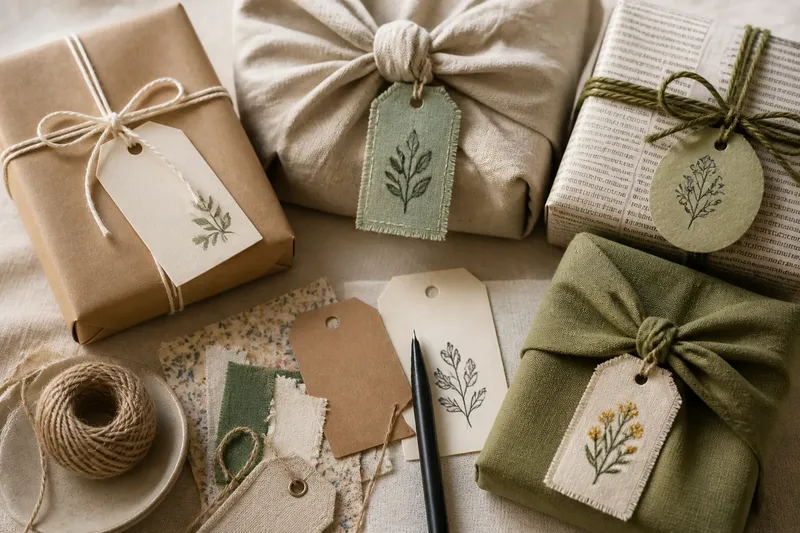
The common mistake with reusable gift tags is choosing a scrap because it looks attractive, then discovering the pen beads on it or the parcel’s string pulls through. For a gift tag made from scrap fabric or paper offcuts, the useful question is how the material will behave on this particular wrapping.
Fabric brings softness and texture; paper offers a flatter writing surface and crisp edges. Neither is automatically better. A small decision about the parcel, the mark you want to make and the way the tag will be tied can spare a good-looking scrap from becoming an awkward label.
What should the tag do on the parcel?
Start with the wrapping itself. Brown kraft paper, a folded newspaper sleeve and a cloth-wrapped parcel ask different things of a tag. A rigid paper tag can sit neatly against a paper package. A fabric tag can soften that look, or echo a fabric ribbon, without needing to match exactly.
Also consider whether the tag must be read at a glance. If the recipient’s name and a short message are the main point, a smooth paper offcut is usually easier to write on. If the tag is mainly a decorative accent, fabric can add a tactile detail while leaving the parcel’s main label on a separate piece of paper.
Say you are wrapping a book in plain kraft paper and want to write a name and a short note on the tag. A stiff offcut from a greeting card could hold its shape, take ordinary handwriting and sit flat under a piece of cotton string. The expected result is a clear label that does not compete with the wrapping.
How do fabric and paper take a mark?
Paper is the more predictable surface for handwriting, but different scraps behave differently. Uncoated card usually accepts pencil, ballpoint and many felt-tip pens cleanly. Glossy packaging can make ink smear or remain wet on the surface. A scrap with a printed pattern may leave little room for a name, even when the paper itself is easy to write on.
Fabric’s weave affects both writing and drawing. A close-woven cotton scrap gives a pen a firmer surface than loose linen or a chunky weave. Fine-tip pens may catch on threads, while broad markers can spread along the fibres. For a legible fabric tag, use a small, pale, closely woven patch and write with a fabric marker suited to the cloth, following its instructions.
Test the intended mark on a leftover corner before cutting the tag to size. Check whether it smudges when rubbed lightly, whether the colour shows against the scrap and whether the writing remains legible from arm’s length. For either material, an unmarked back can hold a longer message if the front is patterned.
Which material attaches more neatly?
Paper can be cut with scissors into a simple rectangle, circle or clipped-corner shape. A hole punched near one end gives string a clear route through, especially if the paper is firm enough not to tear under a light pull. Very thin paper may need to be folded over or backed with another scrap around the hole.
Fabric edges behave differently. A cut edge may fray, which can be part of the look, but loose threads can catch on ribbon and make the tag seem unfinished. A small fabric tag can be folded over a length of string and stitched by hand, or secured with a neat loop of thread. If you want a punched hole, a tightly woven scrap with a stitched edge is less likely to unravel than a loosely woven one.
Attachment should suit the parcel, not just the tag. A broad ribbon can pass through a fabric loop; thin string is easier to thread through a paper hole. For a parcel wrapped in cloth, avoid a stiff tag with sharp corners that could snag the wrapping. For a paper parcel, consider whether a loose fabric loop will slide off before the gift is opened.
How do reusable gift tags fit different wrapping?
On paper wrapping, the tag can be attached with string, narrow ribbon or a small paper loop. Keep it clear of a taped seam so it does not lift as the parcel is handled. A paper tag is often a natural fit here, but fabric can work well when the wrapping has a plain surface that lets its texture show.
On cloth-wrapped gifts, fabric tags tend to sit comfortably alongside the folds and ties. A smooth paper tag can still be useful if the recipient needs a prominent name or message. For a gift wrapped in a reusable scarf, attaching the label to the knot or ribbon rather than piercing the cloth keeps the wrapping intact.
For an irregular parcel, flexibility matters. A soft fabric tag can bend around a bottle neck or tuck under a loose bow. A firm paper tag can stand out from a bundle of small objects, but it may catch on corners. Let the outline follow the parcel: rounded corners and a short tie can make a tag less likely to snag during passing.
What should you check before making a reusable gift tag?
- Writing space: Check that the name will fit without crossing a busy print. Choose a plainer scrap or use the reverse if it will not.
- Surface: Rub a small mark on a test corner. If it smears, switch pen or material before preparing the tag.
- Edges: Look for fraying fabric or paper that splits easily. Trim, fold or stitch the edge, or select a sturdier offcut.
- Attachment: Match the hole, loop or tie to the parcel’s ribbon or string. If it pulls or slips, change the attachment rather than forcing it.
- Reuse: Leave enough space to remove or cover an old name. A blank reverse or a small replaceable paper insert can make repeat use easier.
- Storage: Put finished tags somewhere flat and dry, with their ties tucked alongside. This keeps paper from bending and fabric loops from tangling.
Which material works best for this gift tag?
Choose paper offcuts when clear handwriting, crisp shapes and a flat fit matter most. Old greeting cards, packaging card and uncoated paper from a project can all become tags, provided the surface is clean and there is room for the message. Save glossy scraps for decoration or a tag whose message is written on the reverse.
Choose fabric when texture, softness or a flexible attachment suits the parcel. Small pieces of cotton from a sewing project can be tied into a loop or used as a soft label. If the cloth is dark, patterned or loosely woven, add a plain paper panel rather than trying to force a difficult surface to carry the writing.
A combination can be more useful than choosing one material. A narrow fabric loop can attach a firm paper tag; a fabric shape can carry a small paper insert with the recipient’s name. Keep the parts simple to separate, so the tag can be stored and reused without leaving string, tape or a scrap of the wrapping attached.
Questions about scrap fabric or paper offcuts?
Can I write on any scrap fabric?
No. Weave, colour and finish affect how a mark looks and stays in place. Try the intended pen on a leftover corner, and use a fabric marker when you want a mark designed for cloth.
Is card better than thin paper for a tag?
Card generally holds its shape and a punched hole better, while thin paper can suit a light parcel or a folded label. Pick the lightest scrap that will stay intact during handling.
How can I make a tag reusable?
Leave a blank side, or add a small paper insert that can be replaced after the gift is opened. Avoid writing across a join or attaching the tag in a way that tears the material when removed.
Can a fabric tag be used with paper wrapping?
Yes. A fabric loop or stitched patch can add texture to plain wrapping, while a paper message panel keeps the name easy to read. Check that the tie stays in place and does not pull at the wrapping.
For scrap fabric or paper offcuts, let the parcel settle the choice: paper tends to serve the message, while fabric tends to serve the feel and the fastening. Keep a few clean scraps of each, and make the tag from the one that solves the parcel’s actual problem rather than the one that merely looks most promising in the drawer.