The Chair That Changes a Room by Moving Three Feet
A chair moved three feet can open a route, reveal a view or crowd a doorway. Test its new position with paper and a temporary floor mark.
The common mistake with a cramped room is to push every chair against a wall; it can leave the middle awkwardly empty while blocking the route you use most. A chair moved three feet may change that pattern, opening a passage or turning a blank corner towards the window. Testing the move before committing helps you see what the room gains and what it gives up.
What should the chair do?
Choose one job for the chair before shifting it. It might make a place to read, give someone a seat near the conversation, or let you look out of a window. A clear purpose makes the result easier to judge than the vague aim of making the room feel better.
Notice where you naturally pause, and which direction you face when you sit. A chair beside a bookcase may be handy for reading but face a busy doorway. A chair angled towards the sofa may join a conversation, yet take space from the route between the entrance and the kitchen.
Pick a likely destination and identify the route the chair could improve. Keep the aim modest: for example, make it possible to walk from the door to the window without weaving around furniture. You are testing how one object affects movement and views, not redesigning the whole room.
How do you read the room before moving it?
Stand at the entrance and look across the room. Then walk the paths you use every day: from the sofa to the kitchen, from the bed to the wardrobe, or from the desk to the door. Notice where you turn sideways, detour or stop short. These are useful clues about the room’s routes.
Next, sit in the chair and look at what it frames. A small shift can bring a window, lamp or other person into view. It can also put a doorway directly behind the sitter or turn the chair’s back towards the room. A sightline is simply what you can see from a particular position; check it both while seated and while standing.
Pay attention to nearby objects that could affect the move, such as a low table, floor lamp, radiator or door swing. You do not need to measure everything. You do need to notice whether the chair would obstruct something you use or leave an uncomfortable pinch point.
How can you test the new position?
Move the chair temporarily rather than carrying out a full rearrangement. If the chair is heavy, awkward or likely to mark the floor, ask for help or use suitable furniture glides. Follow the chair or flooring maker’s instructions where these apply. Do not drag a chair across a delicate surface.
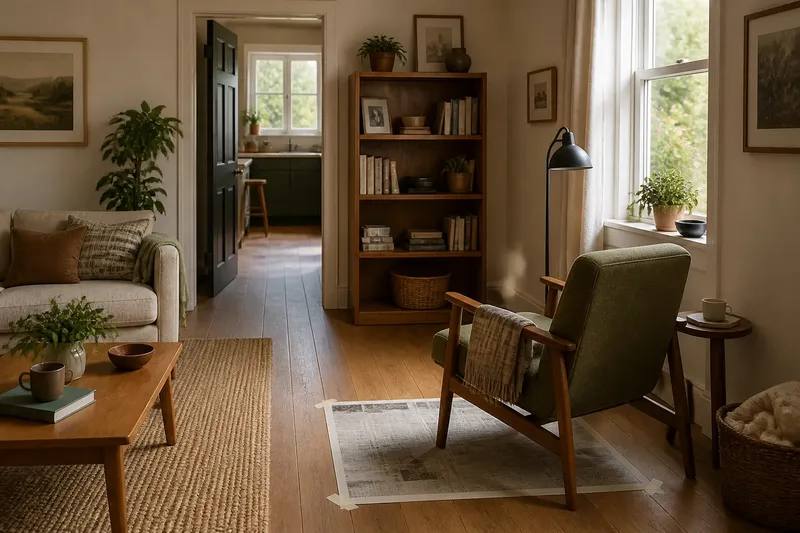
For a lighter test, make a rough footprint from scrap paper or folded newspaper. Mark the chair’s front feet and the direction it will face. If the paper slides, use low-tack painter’s tape at the corners instead, after checking that it is suitable for the floor finish. The outline need not be exact; it should show the space the chair occupies.
Now sit where the chair is meant to go. Check whether you can settle without twisting your body, whether the view suits its purpose, and whether people can pass behind or beside it. Stand up and walk through the room again. A placement can feel inviting from the seat but awkward to pass in daily use.
Say you want to make a reading spot beside a window, but the chair currently faces the television. You move it towards the window and angle it away from the main walkway, then mark its footprint with newspaper. The expected observable result is straightforward: from the seat, the window is in view, while a person walking from the door to the sofa can pass without stepping around the chair.
What should you check before keeping the move?
Try the temporary position during ordinary use, not only while the room is quiet. Sit down, get up, carry a mug past it and open nearby doors or drawers as you normally would. Notice whether the chair catches clothing, interrupts a route or makes another seat less useful.
- Entry route: Can you walk in without immediately turning around the chair?
- Everyday passage: Does the path between the room’s main destinations stay clear?
- Seat access: Can someone sit down and stand up without shifting another piece?
- Useful view: Does the chair face the activity or view you chose it for?
- Nearby fittings: Can doors, drawers and curtains still be used as intended?
- Floor and lighting: Is the chair stable, and does the new position leave its user comfortable?
If one check fails, adjust the angle or slide the chair a little rather than abandoning the idea at once. Small changes in direction can matter as much as distance. If the route remains tight, return the chair to its original place and test a different destination.
Why might a three-foot move still not work?
The chair may be too large for the route, or its new position may expose a view that feels distracting. A radiator, door swing or shared walking path can also make the apparent free space unusable. The test is useful even when the move fails: it shows which constraint matters before you settle on a different arrangement.
Keep the original position in mind as a fallback. Remove the paper or tape and restore the chair if the trial makes everyday movement worse. If the new spot works, place the chair there fully and repeat the same ordinary movements; the final position should feel comfortable in use, not merely tidy from the doorway.
What do readers often ask about moving a chair?
How do I choose which chair to move?
Start with the chair that most often interrupts a route or sits unused despite being in a convenient place. If several could work, choose the one whose purpose is easiest to describe, such as reading or joining a conversation.
Should the chair face the window or the room?
Choose according to what the seat is for. A reading chair may face a window or lamp, while a chair for conversation usually works better with a view of other people and enough room to approach it.
How do I protect the floor while testing?
Use a paper footprint or suitable furniture glides rather than dragging the chair. Check that any temporary tape is appropriate for the flooring, and avoid moving a heavy chair alone if doing so feels unsafe.
How long should I try the new position?
Use it through enough ordinary activities to notice whether the route and view remain comfortable. A quick sit may reveal the sightline, but walking past, getting up and opening nearby doors can reveal problems that a stationary check misses.
A chair’s new position is worth keeping when it supports its intended use and leaves the room’s everyday paths workable. The chair moved three feet is not a rule about distance; it is a reminder to test one clear change, observe how the room responds, and let daily use decide.