The Household Apron, from Workwear to Keepsake
The household apron can be workwear, a family keepsake or both. Learn how to choose, mend and use one without losing the meaning it carries.
The most common apron mistake is treating every one as a disposable shield: useful until stained, then pushed aside. That can cost a household a garment that makes everyday tasks easier, and sometimes a small object carrying memories of who wore it and what they did. A household apron can remain plain workwear, become a keepsake, or move between those roles as circumstances change.
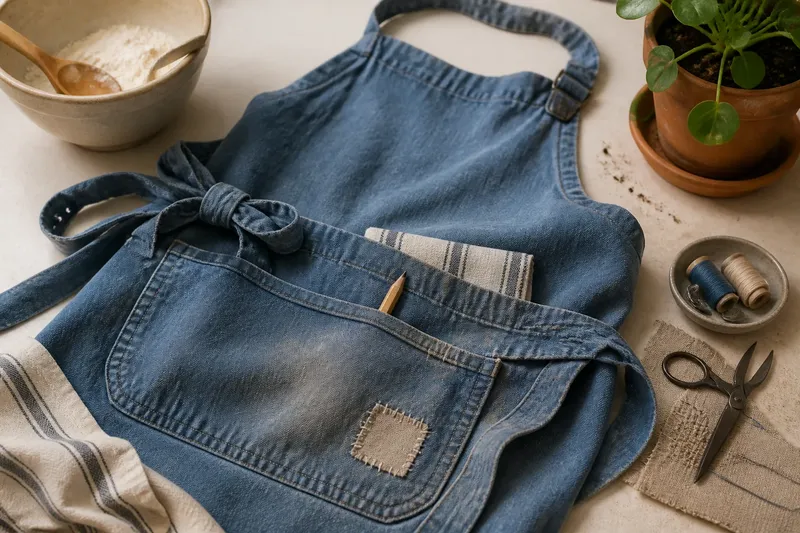
Its meaning does not arrive fully formed. It gathers through use: a pocket that holds a pencil, a faded fold from hanging by the cooker, a patch sewn on after a torn seam. The right choice depends on what you need the apron to do now, how much care you can give it, and whether its history matters to you.
What does an apron need to do in your household?
Start with the tasks, not the idea of a perfect apron. Someone who cooks may want a broad front panel and a pocket for a tea towel. A person who tends houseplants might need coverage at the waist and room to tuck in a pair of gardening gloves. For painting or clay work, a sturdy apron that can take visible marks may be more useful than a spotless one.
Consider who will wear it and how it will be put on. A long neck loop can feel awkward to adjust, while ties at the waist allow a closer fit across different layers of clothing. If the wearer needs to avoid lifting an arm overhead, a cross-back style may be easier to put on. Try the apron over the clothes you expect to wear for the task, and check that it stays comfortable while you bend and reach.
Material affects the feel and the maintenance. Cotton is familiar and often straightforward to wash; denim or canvas can feel more substantial, though thickness can make an apron warmer. A linen apron may soften and crease with use. These are trade-offs, not a ranking. Check the care label or maker’s instructions before washing, especially if the garment includes a lining, unusual trim or a personal mark that matters to you.
Which situation sounds most like yours?
If you need an apron for frequent, messy tasks: Choose a washable garment you can wear without worry. Look for a secure tie, useful coverage and pockets placed where they will not interfere with the work. A visible stain need not be a failure; it may simply show that the apron is doing its job.
If you have inherited an apron: First decide whether you want to use it, display it, or keep it safely stored. Check for weak seams, brittle fabric and loose fastenings before wearing it. If it is too fragile for regular work, keeping it folded in a clean, dry drawer can preserve it while leaving room for a separate working apron.
If you want to make an apron from household fabric: Choose cloth that suits the intended task and the wearer. A retired cotton curtain or tablecloth may offer enough fabric, but inspect it for thin patches and consider how it will wash. Keep the original hem where practical; it can save sewing and preserve a feature of the fabric’s previous life.
If a child wants to join in: A smaller apron can mark a real role in cooking, drawing or gardening. Prioritise a comfortable fit and ties the child can manage with help. Keep it for ordinary, age-appropriate activities, and supervise tasks involving heat, sharp tools or materials that need special handling.
How does useful work turn into personal meaning?
An apron sits close to repeated routines. It is put on before a task and taken off afterwards, so its ties and pockets can become part of how a household begins and ends an activity. A wearer may associate it with mixing dough, wiping muddy hands or helping to water plants. The meaning belongs to the people and routine, not to a particular fabric or style.
Details can make that history legible without turning the garment into a display piece. A hand-sewn patch may mark a repair. A name stitched inside a waistband may identify its owner. A pocket can keep a recipe card or pencil close at hand. These additions are most useful when they suit the wearer; an ornament that catches on a cupboard handle may be better left off.
Imagine a household with an old blue apron whose waist seam has begun to open. One person wants to keep using it for baking, while another worries that a rough repair will hide its history. They might secure the seam with matching thread, then add a small patch on the inside where the strain occurs. The apron remains recognisable, and the repair becomes part of its story without changing how it works.
Should you mend, repurpose or keep it untouched?
Let the garment’s condition and your intention decide. A sound apron with a loose button or a small split may need only a simple repair. A sewing kit, matching thread, a needle and a pair of fabric scissors are enough for many minor jobs. If you are unsure how a repair will affect a particularly valued item, ask a local sewing group or a professional textile conservator before altering it.
For everyday wear, visible mending can be practical. A patch over a thinning area spreads wear across stronger cloth, while a repaired tie can return an apron to use. Choose thread and fabric that are compatible with the apron, and avoid pulling a repair so tight that it puckers the surrounding material.
If the fabric is too weak for work, repurposing may preserve some of it without asking the whole apron to bear strain. A sound pocket could be kept as a small keepsake, or a section could be sewn into a cushion cover or fabric storage pouch. If the apron is personally significant, take a moment to record who wore it or what you know about its use before cutting it. That note can travel with the saved piece.
Keeping an apron untouched can also be a deliberate choice. It is reasonable to set aside a garment whose fabric is fragile, whose marks are meaningful, or whose owner would not want it altered. Store it away from damp and direct sunlight, and avoid folding it repeatedly along the same weakened crease. For valuable or delicate textiles, a conservator can advise on suitable storage.
What do readers ask about household aprons?
Can an old apron still be worn?
Often, if the fabric, seams and ties can withstand ordinary movement. Check for brittle areas and splits before use, and reserve a fragile garment for keeping rather than work.
How can I keep an apron’s history visible?
Leave distinctive details in place where they do not obstruct use, and make repairs that respect the cloth. A short written note about its owner or routine can preserve context that fabric alone cannot explain.
Is a new apron less meaningful than an inherited one?
No. An inherited apron may carry a known history, while a new one can gather meaning through repeated household routines. The value comes from the role people give it, not from its age.
What should I do with an apron nobody wears?
Ask whether it is unused because it is uncomfortable, unsuitable for the task or too delicate to handle. A small adjustment may make it useful; if not, keep, share or repurpose it according to its condition and significance.
How can an apron belong to the household now?
Give it a place that makes its role clear. A hook near the kitchen can keep a working apron within reach; a folded keepsake belongs somewhere clean and protected. If several people share it, agree whether it is available to everyone or belongs to one wearer. That simple decision prevents a sentimental garment from becoming an accidental spill cloth.
The household apron can be both useful and remembered, but it does not have to be both at once. Choose the role that fits its condition and your present routine. When the garment changes roles, let the next decision be modest and specific: mend the tie, put it away carefully, or keep a piece of its fabric and its story together.